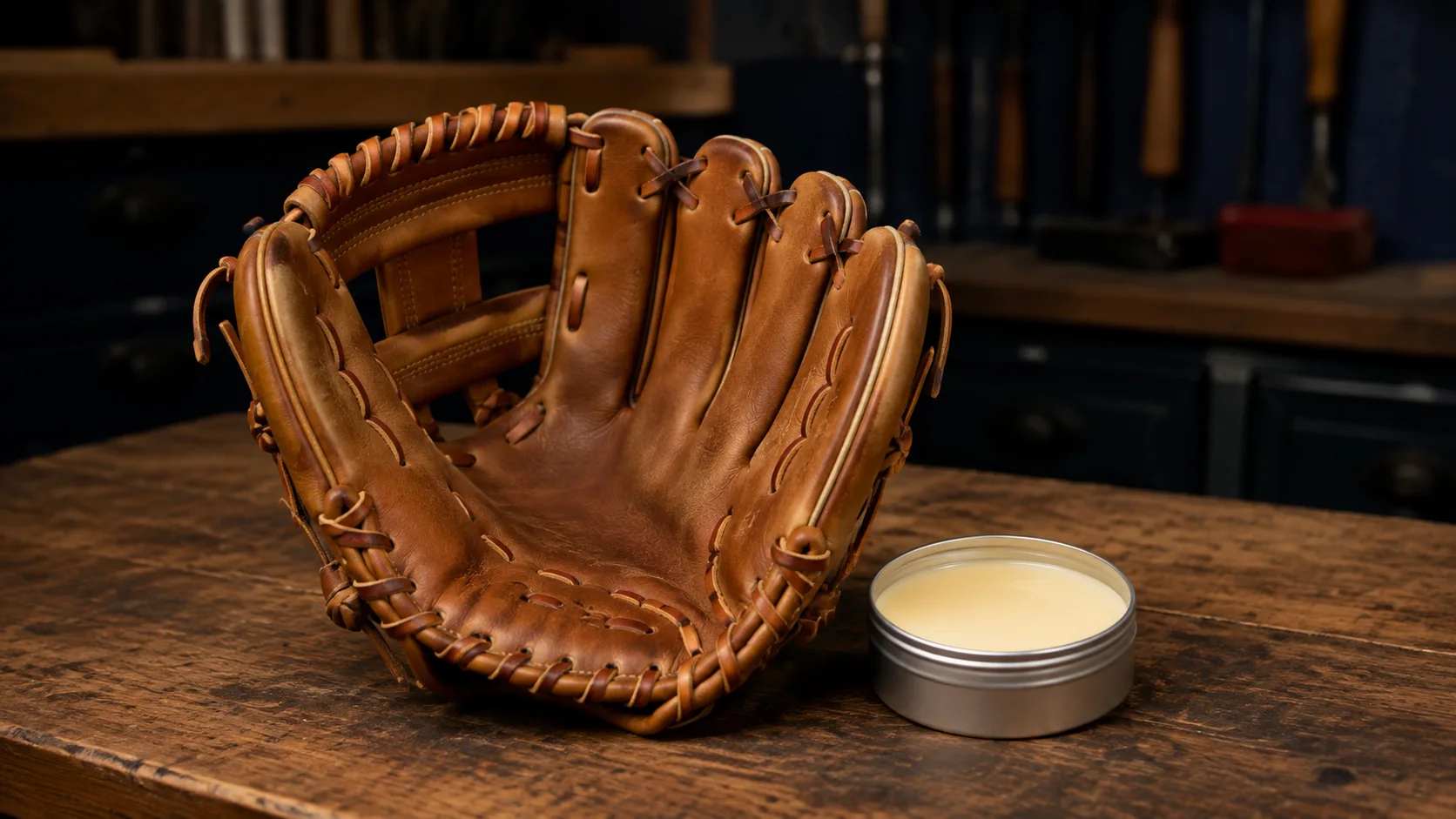
Conditioner can help dry leather stay flexible and resist cracking. But too much can make a glove darker, heavier, greasy, and too soft. The goal is to maintain the leather—not soak it.
One important distinction: conditioning does not clean a glove. If the glove is dirty, clean it first and let it dry fully before adding conditioner.
Condition the glove when the leather feels dry—not because the calendar told you to.
How to do it properly
-
Make sure the glove needs it.
Dry leather may feel rough or dull and resist flexing. If the leather still feels supple—or already looks shiny or greasy—leave it alone.
-
Use a glove-safe leather conditioner.
Spot-test it in an inconspicuous area first. Conditioner can darken leather, especially lighter colors.
-
Put a small amount on a clean cloth.
Do not pour or squeeze it directly onto the glove. Start with about a pea-sized amount. You can add another thin coat later; removing too much is much harder.
-
Apply a thin, even coat.
Work in small circles over the shell and palm, paying attention to dry flex points. Do not pack conditioner into the seams, finger stalls, or padding.
-
Let it rest, then wipe away the excess.
Leave the glove at room temperature for a few hours or overnight. Keep it away from heaters and direct sun. Buff it with a clean cloth, then play catch to work it naturally.
Signs you used too much
- The surface feels tacky or greasy.
- The glove feels noticeably heavier.
- The leather becomes much darker.
- The glove loses structure and feels floppy.
Conditioner is not a shortcut for breaking in a glove
A light coat can support healthy leather, but playing catch is what teaches a glove how to close around the ball. Conditioner should help preserve the glove—not force it into shape.
Not sure what your glove needs?
Send me a few photos.
If a light coat at home is all it needs, I will tell you. If it needs a deeper clean, conditioning, relacing, or repair, I can handle that too.
Show Me Your Glove— Brett
Murph’s Mitt Maintenance